
Protect Your Digital Assets From a Crypto Market Crash

Why understanding crypto market crashes matters for individuals and SMBs
Have you ever seen how fast the prices of digital money, like Bitcoin, can change?

One day, a coin might reach a bitcoin all time high. The next day, you could see a big drop, what we call a crypto market crash. This quick change can make people and small businesses lose money very fast. It’s a real worry for anyone who uses or holds cryptocurrency.
The truth is, the world of digital money is known for its ups and downs. These big shifts, like a sudden cryptocurrency market crash, mean that the value of your digital assets can drop sharply. Even stablecoins, which are designed to stay steady, can feel stress when the wider crypto market is in trouble. Knowing this is important because market experts often point to risks like those seen in late 2025 and early 2026, where high prices in various markets could lead to bigger drops later on [^1].

We’ve seen that even after structural improvements, crypto markets can still end a year down, showing prices don’t just keep going up [^2].

That’s why understanding these market crashes is so important in 2026. This guide will help you learn why these crypto market crash events happen. We will look at what causes a bitcoin price crash and how stablecoins typically react during tough times. You will also find simple, useful steps to help protect your digital assets. For more guidance on keeping your crypto safe and learning more about how stablecoins work, you can explore resources like our guide on Stablecoin Due Diligence.
For ongoing, easy-to-understand crypto education and safety tips, many find the free Clicks and Trades newsletter very helpful. It gives clear guidance on navigating the crypto world.
Ready to learn how to keep your digital assets safer? Sign Up for helpful insights.
[^1]: ESMA. (2026). TRV Risk Monitor. Retrieved from https://www.esma.europa.eu/sites/default/files/2026-03/ESMA50-1949966494-4041_TRV_Risk_Monitor_1_2026.pdf
[^2]: Binance Research. (2026). Full-Year 2025 & Themes for 2026. Retrieved from https://public.bnbstatic.com/static/files/research/full-year-2025-and-themes-for-2026.pdf
What is a crypto market crash? Key concepts and common triggers
So, what exactly is a crypto market crash? Imagine prices of digital money, like Bitcoin, falling really fast and a lot, all at once. That’s a cryptocurrency market crash. It’s a big drop, not just a small wiggle in price. A small wiggle is called a "correction," where prices dip a little and then usually go back up. A crash is much bigger and can make people lose a lot of money quickly. We’ve seen that even with market improvements, prices don’t always go up and sometimes crypto markets can end a year down [^1].
To understand why a bitcoin price crash happens or why other digital coins fall, we need to look at what can cause these big drops.
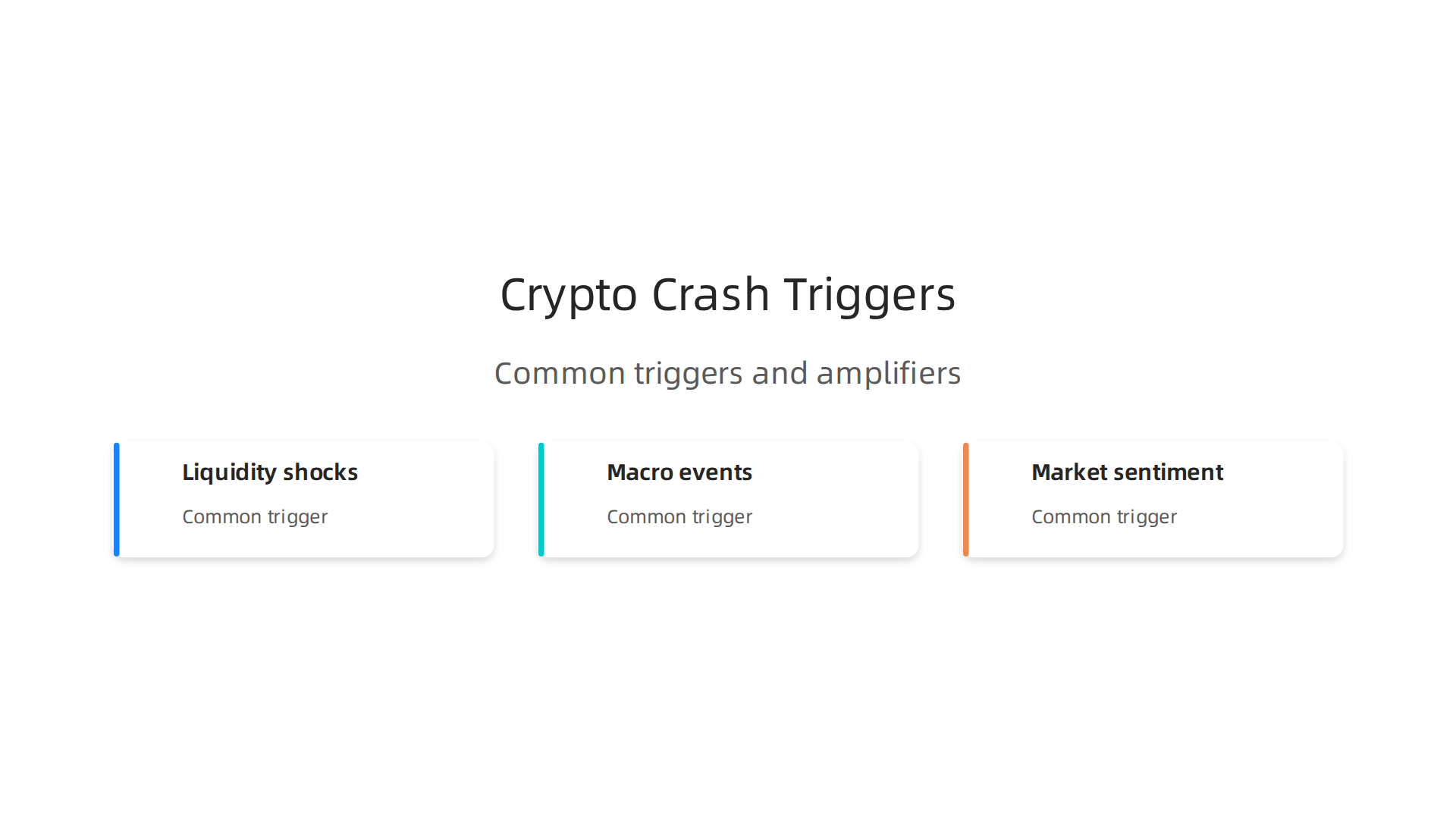
Here are some common things that can trigger a crypto market crash in 2026:
- Liquidity Shocks: This is when there isn’t enough money available for people to easily buy and sell crypto. If many people want to sell their crypto at the same time and there aren’t enough buyers, prices can crash quickly.
- Big World Events (Macro Events): Important news about the global economy or big changes in how countries handle money can affect crypto prices. For example, if interest rates change a lot, people might move their money out of risky things like crypto and into safer options. Experts noted that high valuations in late 2025 and early 2026 in different markets could mean bigger risks for drops later [^2].
- Problems Spreading (Contagion): Sometimes, if one big crypto company or project runs into trouble and fails, its problems can spread to other parts of the crypto market. This is like a domino effect, making more coins lose value. A trust crisis, like a stablecoin experiencing vulnerabilities, can trigger this [^3].
- New Rules (Regulatory Shocks): When governments or financial groups announce new, strict rules about how crypto works, it can make people nervous and cause them to sell their digital assets.
Here’s the thing: people’s feelings and borrowed money can make these drops even bigger.
- Feelings (Sentiment): When people get scared or lose trust, they tend to sell their crypto very fast. This rush to sell can push prices down even more. We see this with Bitcoin, where how people feel can really spread through the market [^4].
- Borrowed Money (Leverage): Many people use borrowed money to buy more crypto than they actually own. This is called leverage. If the market starts to fall, these people might be forced to sell their crypto quickly to pay back what they borrowed. This urgent selling adds more pressure and can make a
crypto market crashmuch worse.
Understanding these concepts is a key step in navigating the world of digital assets. For anyone new to digital money, learning the basics of how it works is very helpful. You can learn more about this by checking out our guide on What is Cryptocurrency? Clear Definitions, Types, and Stablecoin Safety.
For ongoing, easy-to-understand crypto education and safety tips, many find the free Clicks and Trades newsletter very helpful. It gives clear guidance on navigating the crypto world. Ready to learn how to keep your digital assets safer? Sign Up for helpful insights.
Historical patterns and early warning signals (how crashes often evolve)
Understanding a crypto market crash isn’t just about knowing what causes it. It’s also about seeing how these big drops often unfold over time. Think of it like watching a storm gather. There are often signs before the heavy rain starts.
A typical cryptocurrency market crash usually follows a few steps:
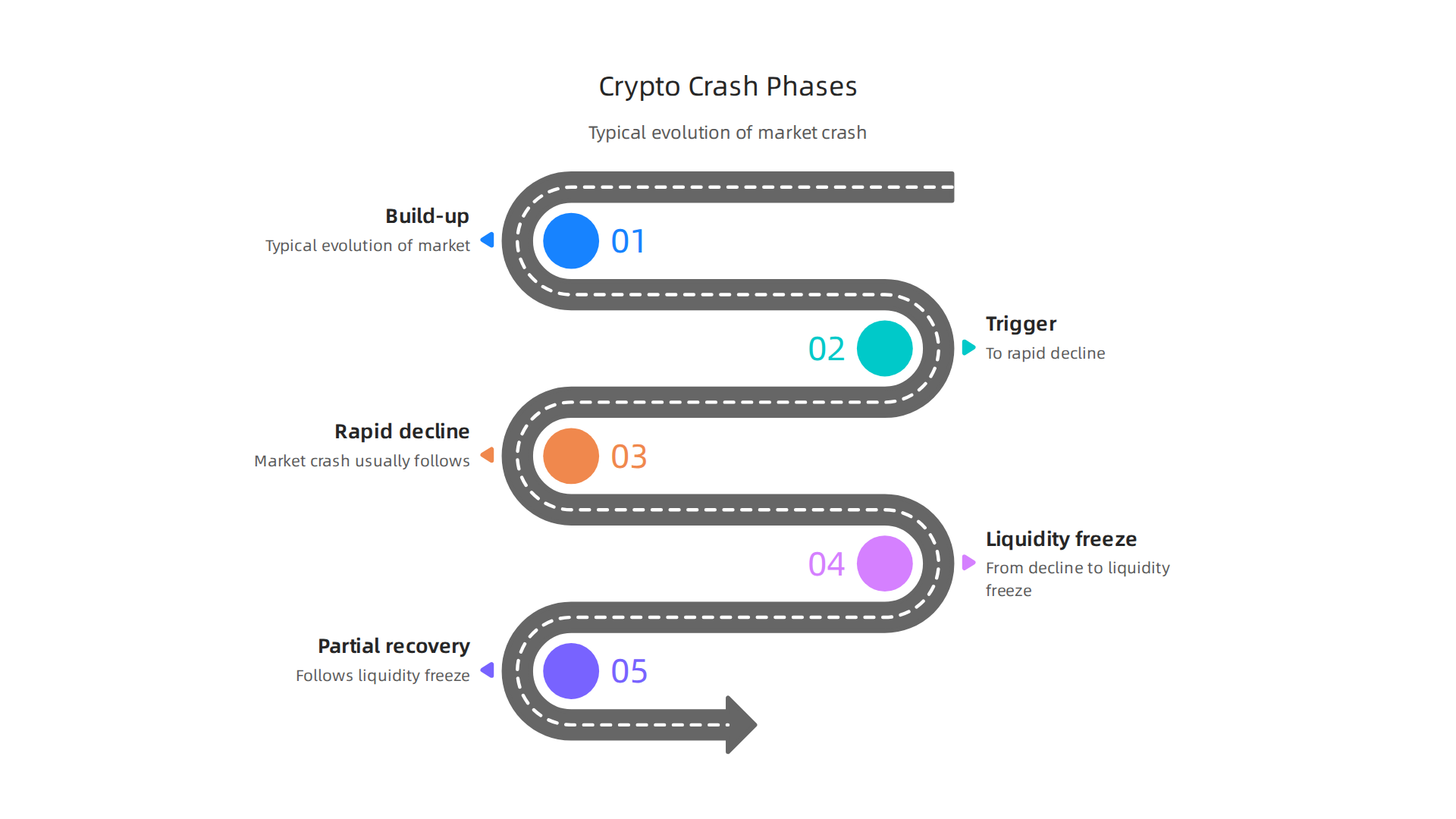
- The Build-Up: Before a crash, prices often go up a lot, very quickly. Everyone gets excited, and sometimes people talk about a
bitcoin all time highor "crypto bubbles." This is when many folks jump in, hoping to get rich fast. - The Trigger: Then, something specific happens. It could be big news about new rules, a problem with a major crypto company, or even something happening in the wider world economy. This "trigger" starts the downward slide.
- Rapid Decline: After the trigger, prices fall very fast. This is the
bitcoin price crashpart. People panic and rush to sell their digital money. This makes prices drop even more quickly. - Liquidity Freeze: During the worst of the crash, it can become hard to buy and sell. There are many sellers, but not enough buyers. This "liquidity freeze" means you might not be able to sell your crypto easily, even if you want to.
- Partial Recovery: After the sharp fall, the market often finds a bottom and prices might go up a little bit. It’s usually not a full return to the old high prices, but the rapid fall stops.
Early Signs to Watch For
While no one can perfectly predict the future, there are some important signals that can warn us a crypto market crash might be coming. Experts are always looking for ways to predict these trends [^3]. These are like warning lights on a car dashboard:
- Order Book Changes: Imagine a list of all the buy and sell orders for a crypto coin. This is called an "order book." When things are healthy, there are lots of buyers ready at different prices. But if the order book starts to look "thin" with fewer buy orders, it can mean less support for the price. This "microstructure" of the market can show changes before big moves [^7].
- Funding Rate Spikes: Many people use borrowed money, called "leverage," to trade crypto. They pay a small fee, called a "funding rate," to keep these borrowed positions open. If this fee suddenly gets very high, it means many traders are making risky bets that prices will keep going up. A sudden change in these rates can show that the market is getting too risky and a big drop might be near.
- Stablecoin Flows: Stablecoins are a special type of crypto designed to hold a steady value, like one US dollar. They are often used to move money in and out of the crypto market. If you see a lot of stablecoins moving off crypto exchanges, it can be a sign that people are taking their money out of the market because they expect a
crypto crash today. Looking at these stablecoin flows can give clues about what might happen next in the market [^4]. In 2026, understanding stablecoin risks is even more important as new rules and reporting criteria are being put in place [^13, ^20, ^21].
Paying attention to these patterns and signs can help you better understand the ups and downs of the crypto world.
For ongoing, easy-to-understand crypto education and safety tips, many people find the free Clicks and Trades newsletter very helpful.

It gives clear guidance on navigating the crypto world. Ready to learn how to keep your digital assets safer? Sign Up for helpful insights.
How stablecoins behave during a crypto market crash
In the last section, we talked about how watching stablecoin flows can be an early sign of trouble. But what exactly are stablecoins, and how do they act when a crypto market crash hits? Understanding this is super important, especially in 2026, as more people use them.
Stablecoins are a special type of cryptocurrency designed to keep a steady value, often matching the US dollar. They aim to be a safe harbor during a wild cryptocurrency market crash. However, not all stablecoins are built the same, and their design affects how they handle stress.
Different Kinds of Stablecoins
There are a few main ways stablecoins try to stay "stable":
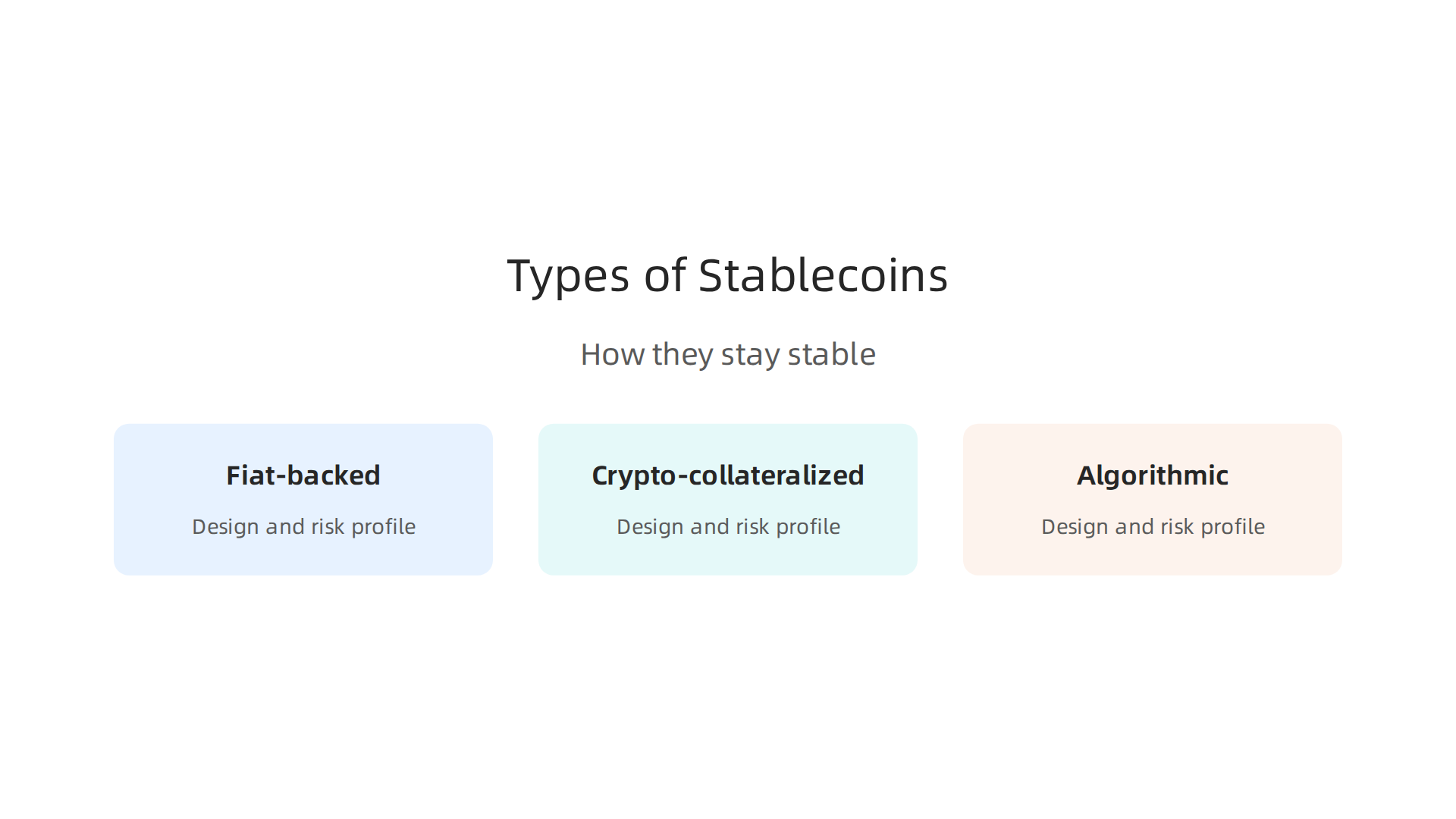
- Fiat-Backed Stablecoins: These are the most common. For every stablecoin in existence, the company promises to hold an equal amount of real money, like US dollars, in a bank account. Think of it like a digital dollar bill. If the company truly holds the funds, these should be quite strong during a
bitcoin price crash. But sometimes, knowing exactly what they hold can be hard [^6]. - Crypto-Collateralized Stablecoins: These stablecoins use other cryptocurrencies as backing, but often more than 1 dollar’s worth for each stablecoin. This extra backing is a cushion. If the price of the backing crypto drops a little, there’s still enough value to keep the stablecoin at $1. However, if the backing crypto has a huge
crypto market crash, even the extra cushion might not be enough. - Algorithmic Stablecoins: These are often the riskiest. They don’t use real money or other crypto directly as backing. Instead, they rely on complex computer rules (algorithms) and sometimes other linked tokens to keep their price at $1. During a
crypto market crash, these systems can break down, causing the stablecoin to lose its peg and fall sharply, which is called "depegging" [^3]. In March 2026, for example, a code issue with a stablecoin called USR caused a trust problem in the market [^1].
How Stablecoins Can Fail
Even though they’re called "stable," these digital assets can face big problems, especially during a crypto market crash today:
- Liquidity Mismatch: This happens when many people want to sell their stablecoins for real money at the same time, but the company doesn’t have enough ready cash to pay everyone back. Imagine everyone wanting to take their money out of a bank at once, and the bank doesn’t have it all in the vault.
- Reserve Opacity: This means the company behind the stablecoin isn’t clear about what assets they hold as backing. If no one can see proof that the stablecoin has enough real money or crypto to cover its value, people lose trust. This lack of transparency is a major concern for many in 2026 [^6]. Learning to properly check stablecoin reserves can help you avoid problems. You can learn more about how to do this in our guide on stablecoin due diligence.
- Redemption Freezes: Sometimes, when things get really bad, a stablecoin issuer might stop letting people exchange their stablecoins for real money or other assets. This is like a bank closing its doors and not letting anyone withdraw funds, trapping your money.
Even with these risks, stablecoins are proving to be resilient in 2026, showing a slight increase in market value in the first quarter [^5]. But it’s clear that understanding how they work is key to using them safely.
For ongoing, easy-to-understand crypto education and safety tips, many people find the free Clicks and Trades newsletter very helpful. It gives clear guidance on navigating the crypto world, including insights on stablecoin safety. Ready to learn how to keep your digital assets safer? Sign Up for helpful insights.
A Practical Risk-Assessment Framework for Evaluating Stablecoins
After learning about the different kinds of stablecoins and how they can fail, especially during a crypto market crash, you might wonder how to pick a good one. It’s smart to have a clear way to check them. Think of it like a simple checklist. This helps you avoid bad surprises and manage your digital money with more confidence. In 2026, with all the changes in the crypto world, having a framework is more important than ever.
Here’s a simple framework to help you look at stablecoins:
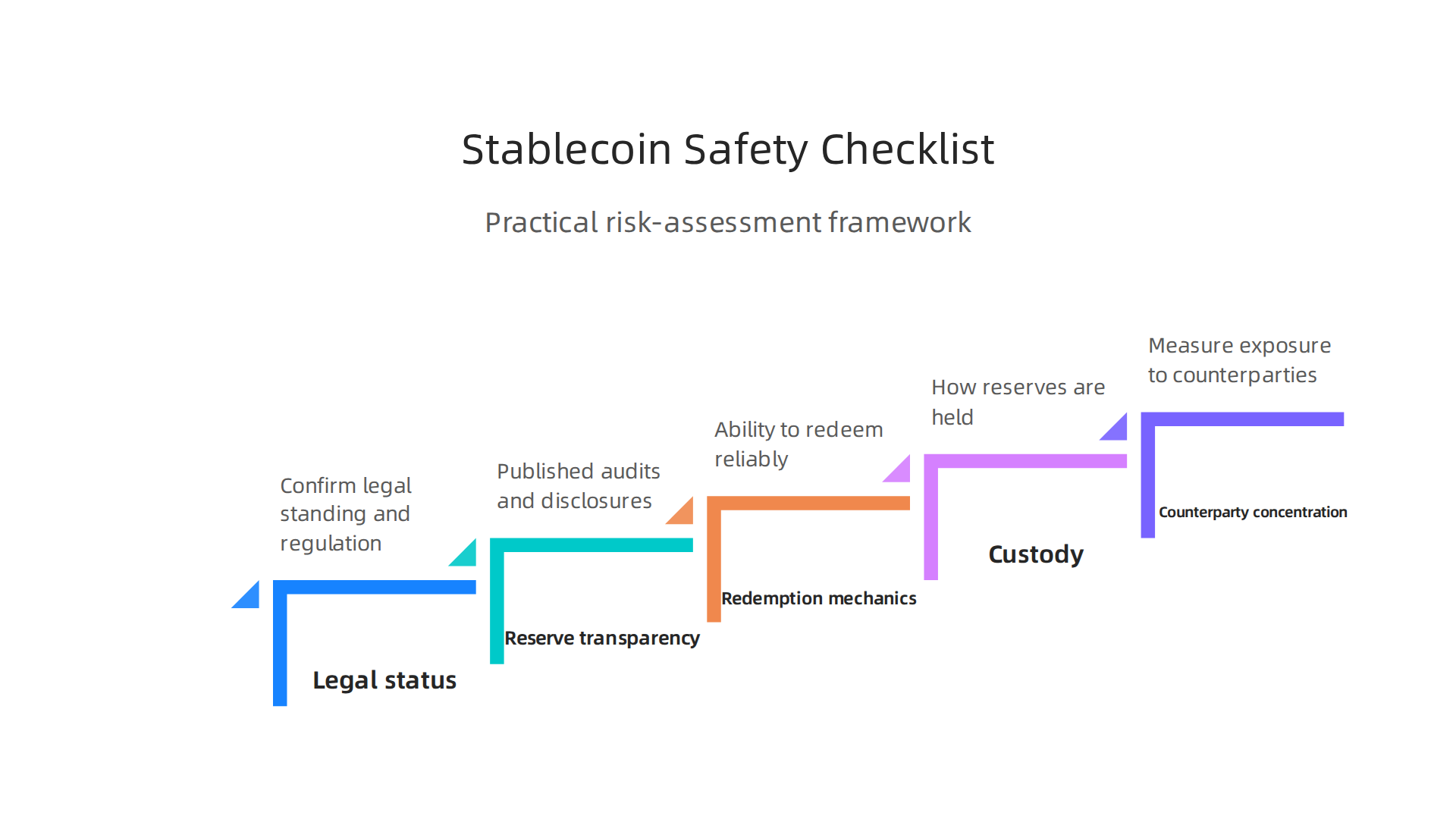
Your Stablecoin Safety Checklist
- Legal Status and Rules: Is the stablecoin allowed to operate where it does? Do they follow the rules? In 2026, new laws are coming out, like the GENIUS Act, which aims to set clearer rules for stablecoin companies [^16]. This means stablecoins might soon have stricter reporting and audit rules, similar to what the FDIC has proposed [^13]. A stablecoin that follows these rules is generally safer.
- Reserve Transparency: Can you easily see what assets the stablecoin holds as backing? This is super important. Look for stablecoins that get regular checks by independent groups. These checks should show what they own and that it matches the stablecoins they’ve given out. If you can’t clearly see their reserves, that’s a red flag. Knowing how to properly check these details is part of good stablecoin due diligence.
- Redemption Mechanics: How easy is it to swap your stablecoins back for regular money, like US dollars? How long does it take? Are there high fees? During a
cryptocurrency market crash, you want to be able to get your money out quickly if needed. Clear and fair redemption rules are a must. - Custody of Reserves: Who holds the actual money or assets that back the stablecoin? Is it a well-known, trusted bank, or a smaller, less-known company? The place holding the reserves should be secure and regulated.
- Counterparty Concentration: Are all the stablecoin’s backing assets held in one type of investment or with one company? If so, that’s risky. If that one thing or company has problems, the stablecoin could be in trouble. A good stablecoin spreads its reserves out to lower this risk, so a sudden
bitcoin price crashaffecting one asset won’t wipe out everything. Many businesses consider these risks in 2026 when using stablecoins [^9].
Weighing Risks for Different Users
Not everyone needs to look at stablecoins in the exact same way.
- For Individuals (Retail Users): If you’re just using stablecoins for everyday transactions or holding a small amount, you might focus on things like ease of use, basic transparency, and quick redemptions. You want something simple and reliable that won’t give you a headache if there’s a
crypto market crash today. - For Small to Medium-Sized Businesses (SMB Treasuries): If a business is holding a lot of money in stablecoins, they need to be much more careful. They should dig deep into legal compliance, detailed audit reports, and strong custody solutions. They need to ensure the stablecoin fits all their business rules and keeps their money super safe. Businesses have a lot more to lose, so they need to be extra strict with their checks [^9].
No matter if you’re an individual or a business, taking the time to assess stablecoins properly is key. It helps you stay safe in the changing crypto world.
For ongoing, easy-to-understand crypto education and safety tips, many people find the free Clicks and Trades newsletter very helpful. It gives clear guidance on navigating the crypto world, including insights on stablecoin safety. Ready to learn how to keep your digital assets safer? Sign Up for helpful insights.
Practical Steps Individuals Can Take Before, During, and After a Crypto Market Crash
It’s one thing to know how to check a stablecoin, but it’s another to know what to do when the whole crypto market goes wild. A big crypto market crash can feel scary, but with a plan, you can protect your digital money better. Think of it like getting ready for a big storm. In 2026, the crypto world is always changing, so being prepared is super important.
Here are some simple steps you can take.
Before a Crypto Market Crash: Get Ready
Being ready before a cryptocurrency market crash hits is your best defense.
- Don’t Put All Your Eggs in One Basket (Diversify!): This means spreading your money around. Instead of just one type of stablecoin or one kind of crypto, own a few different ones. This way, if one has a problem, your whole investment isn’t wiped out. You can learn more about different types of digital money in our guide to what is cryptocurrency. It’s also smart to think about other kinds of investments, not just crypto.
- Decide How Much You’re Okay Losing (Position Sizing): Only put money into crypto that you can truly afford to lose. If a
bitcoin price crashor a general crypto slump happens, you don’t want to lose money you need for rent or food. Setting clear limits helps you stay calm later. - Really Check Your Stablecoins: Before a crash, take the time to look closely at the stablecoins you hold. Does it have real money backing it up? Can you easily see its reports? How quickly can you change your stablecoins back into regular money? In 2026, new rules like the GENIUS Act are pushing for more transparency and risk management for stablecoins [^6]. You want stablecoins that follow these rules, showing they have strong ways to handle risks and give your money back [^9]. Learning to pick good ones is part of making smart choices for which crypto to invest in 2026.
- Set Your Own "Stop" Rules: Decide ahead of time: "If my crypto goes down by this much, I will sell some of it." Or, "I will only put X amount of money into crypto." Having these rules helps you avoid making rushed decisions if there’s a
crypto crash today. Think of it as your personal safety net. Experts suggest having clear risk management plans for digital assets [^4].
During a Crypto Market Crash: Stay Calm and Follow Your Plan
When a crypto market crash is happening, things can feel very hectic. This is when your plan comes in handy.
- Be Ready to Get Your Money Out (Liquidity): Make sure your stablecoins are on platforms where you can easily swap them for regular money if you need to. During a rush, some ways to get your money might slow down. Stablecoin issuers need to manage their reserves carefully to handle big demands for withdrawals, especially during market stress [^8].
- Don’t Panic Sell All at Once (Staged Withdrawals): If you decide you need to take money out, do it in smaller steps instead of one big move. This can help you avoid making a decision you might regret if the market starts to bounce back.
- No Emotional Trading (Avoid Panic!): It’s easy to get scared when you see a big
bitcoin price crash. But making quick decisions based on fear often leads to bigger losses. Stick to the rules you made before the crash. Remind yourself that market ups and downs are normal, even if abitcoin all time highfeels far away. Many people find value in having clear strategies to manage their crypto during volatile times [^1]. For more help navigating these waters, the free Clicks and Trades newsletter offers simple, step-by-step guidance. - Use Your Checklist: Remember that checklist you made? Now’s the time to use it. Your checklist should guide your actions. Did you plan to check news sources, confirm stablecoin reserves, or move funds? Just like businesses have checklists for stablecoin risks and compliance, you should too [^2].
After a Crypto Market Crash: Learn and Look Ahead
Once the dust settles from a crypto market crash, take some time to think about what happened. Did your plan work? What could you do better next time? Learning from each market event makes you a smarter crypto user.
To keep learning and stay safe in the changing crypto world, getting good advice is key.
Ready to learn how to keep your digital assets safer? Sign Up for helpful insights from Clicks and Trades.
For businesses, especially Small to Medium-sized Businesses (SMBs) and those managing company money (treasury teams), using stablecoins can be very helpful.

Stablecoins are made to stay at a steady price, like the US dollar, which makes them good for payments and holding value without the big ups and downs of other cryptocurrencies. However, even stablecoins have risks, especially during a wider crypto market crash.
In 2026, with new rules like the GENIUS Act, it’s more important than ever for businesses to have a solid plan. These rules help make stablecoins safer by requiring clear information about their reserves and how they manage risks [^3], [^13]. Just like individuals, businesses need to be ready.
Treasury-Specific Controls for Stablecoins
Managing company funds requires careful planning. Here are some steps SMBs and treasury teams can take:
- Set Clear Limits: Decide how much company money can be kept in stablecoins. This helps manage risk. You might set a limit for how much of your overall cash reserves can be digital.
- Use Different Stablecoins: Don’t put all your digital eggs in one basket. Use a few different stablecoins instead of just one. If one stablecoin has a problem or a
crypto crash today, your company’s funds are not all at risk [^5]. - Check Legal Agreements: Make sure you understand the rules and contracts with the stablecoin issuers and platforms you use. These agreements should protect your company if something goes wrong. Understanding these legal details is a key part of digital asset compliance in 2026 [^4].
- Regularly Check Records: Set up a routine to compare your company’s stablecoin balances with the records from the platforms you use. This "reconciliation" helps catch any mistakes or problems early. Good stablecoin reporting criteria exist to help with this [^11].
Building an Operational Playbook for Stablecoins
A playbook is like a step-by-step guide for what to do in different situations. For stablecoins, it means being ready for a cryptocurrency market crash.
- Plan for Getting Cash (Liquidity Ladders): Think about how quickly you might need to turn stablecoins into regular money. Have a plan for different amounts and different timeframes. This helps ensure your business can always access funds, even if there’s a big demand for withdrawals during market stress [^9].
- Carefully Choose Partners (Counterparty Due Diligence): Before working with any stablecoin platform or service, do your homework. Check their history, their security, and how they manage risks. Bad partners can add hidden risks [^2]. A practical checklist for stablecoin integration often covers compliance, liquidity, and risk [^1]. You can also learn more about carefully choosing platforms in our guide on how to avoid these mistakes when choosing the best crypto trading platform in 2026.
- Have Backup Plans (Contingency Liquidity Sources): What if your main way to get cash from stablecoins isn’t working during a
crypto market crash? Have other ways to get funds ready. Regulators are looking at new rules for stablecoin issuers that focus on capital, liquidity, and risk management [^16].
By taking these steps, SMBs and treasury teams can use stablecoins more safely and confidently, even when the crypto market gets shaky. Being prepared is the best way to protect your business’s digital money.
For more simple, step-by-step guidance on managing crypto and stablecoins for your business, consider subscribing to the free Clicks and Trades newsletter.
Ready to learn how to keep your digital assets safer? Sign Up for helpful insights from Clicks and Trades.
Regulatory and market-structure factors that change crash dynamics
When we talk about a crypto market crash, it’s not just about prices going down. It’s also about how the overall rules and setup of the crypto world make things better or worse. In 2026, we see how important clear rules are for stopping problems from spreading too fast.
Think of it this way: when there are not enough rules, or the rules are unclear, problems can grow bigger. For example, if stablecoins are used more and more in finance but don’t have strong safety rules like banks do, it can add to risks [^1]. This means that a small problem with one stablecoin could cause bigger issues across the entire market, leading to a wider cryptocurrency market crash.
How Rules and Market Setup Help or Hurt During a Crash:
- Market Structure Triggers: The way crypto markets are built, including how exchanges work and how trades happen away from public exchanges (called OTC), can change how risks appear. Rules need to match these market setups to prevent big problems [^3]. Strong exchanges with good practices can help keep things stable, while weak ones can make a
crypto crash todayfeel much worse. - Clear Disclosure Rules: When stablecoin companies have to openly show what money they hold to back their stablecoins, it helps everyone trust them more. If a company is not clear, people get nervous, and that worry can make a
crypto market crashmore intense. This transparency helps everyone evaluate stablecoins better [^2]. - Safe Custody Rules: Rules about how digital assets are kept safe, like in special accounts or with trusted third parties, are very important. If these rules are strong, it helps prevent fraud or assets from disappearing during a crisis. This makes the whole financial system stronger against shocks [^4].
- Central Bank Thinking: Big financial institutions like central banks are always looking at new digital money like stablecoins. They think about how these new types of money might affect the whole money system. Their thoughts and any new guidelines they create can change how the market reacts when things get tough [^5]. For instance, how easily stablecoins can be turned into regular cash, known as liquidity, is a key thing they watch [^5].
In short, a strong and clear set of rules, along with well-built market systems, can help make a crypto market crash less damaging. It helps prevent problems from spreading and gives ways to fix them. Understanding these big picture items is just as important as knowing how to pick the right crypto to invest in. You can learn more about how market rules influence risk by exploring how to evaluate stablecoins carefully.
To get simple, step-by-step guidance on understanding these complex topics and protecting your digital assets, consider exploring the free Clicks and Trades newsletter, which helps make sense of crypto and stablecoins for your business.
Ready to learn how to keep your digital assets safer? Sign Up for helpful insights from Clicks and Trades.
Summary
This article explains why crypto market crashes matter for individuals and small businesses and gives practical guidance for navigating them in 2026. It defines what a crash is, outlines common triggers like liquidity shocks, contagion, sentiment and leverage, and describes the typical stages of a crash from build-up to partial recovery. The piece dives into how different stablecoin designs (fiat-backed, crypto-collateralized, algorithmic) behave under stress, how they can fail, and offers a simple due-diligence framework to evaluate reserves, legal status, redemption mechanics, custody and concentration risk. Actionable steps cover what to do before, during and after a crash—diversify, set position limits, use staged withdrawals and follow a checklist—and it presents treasury-specific controls and contingency planning for SMBs. Finally, the article highlights how clearer regulation and market structure reforms can reduce systemic risk and why ongoing education and checklists are essential for safer crypto use.