
Avoid These Mistakes When Choosing the Best Crypto Trading Platform in 2026
Navigating the Complex World of Crypto Trading
Looking to start day trading crypto or simply learn how to buy cryptocurrency? It can feel overwhelming. You’re not just picking a digital asset. You’re choosing where to put your real money. The difference between a smooth experience and a costly mistake often comes down to the platform you use.
In 2026, the crypto trading landscape is more crowded and complex than ever. New exchanges pop up, regulations shift, and the promises all sound good. This makes your platform choice absolutely critical to both your security and your success. It’s the foundation for everything you do.
The risks traders face are very real. Security breaches can lock you out of your funds. Opaque platforms might hide risky practices. The regulatory environment itself is a moving target, with frameworks like MiCA in the EU and evolving SEC guidance in the US shaping what exchanges can do. As one 2026 guide notes, understanding these rules is a key practical step for traders. This all underscores a non-negotiable need for rigorous evaluation before you deposit a single dollar.
So, what does that foundation look like? First, it requires a trustworthy platform. We’re talking about exchanges that prioritize security with features like withdrawal allowlisting and top-tier custody certifications, not just slick apps. Second, it demands a sound strategy, whether you’re into short term crypto trading or long-term holds. Guessing is not a plan.
This is where informed decision-making separates hopeful investors from prepared ones. It’s about knowing what questions to ask. For instance, how do you evaluate the stability of the assets you might hold, like stablecoins? Our guide on stablecoin due diligence breaks down the essential risks and types to check.
Finding the best crypto trading platform in 2026 isn’t about chasing the highest leverage or the most coins. It’s about finding a secure, reliable partner that fits your goals. It’s the essential first step in managing your assets wisely.
Feeling unsure where to start with all this? You don’t have to figure it out alone. For clear, step-by-step crypto education and safety tips delivered straight to your inbox, consider subscribing to the free Clicks and Trades newsletter. It’s a great way to build your knowledge with trustworthy guidance. Sign Up for free today.
The Foundation of Trust: What to Look for in a Crypto Trading Platform
Trust is not just a feeling. It’s built on clear, verifiable pillars. The best crypto trading platform for you in 2026 is one that proves its reliability long before you make your first trade. This isn’t about flashy apps or a long list of altcoins. It’s about the fundamentals that keep your money safe and your experience fair.
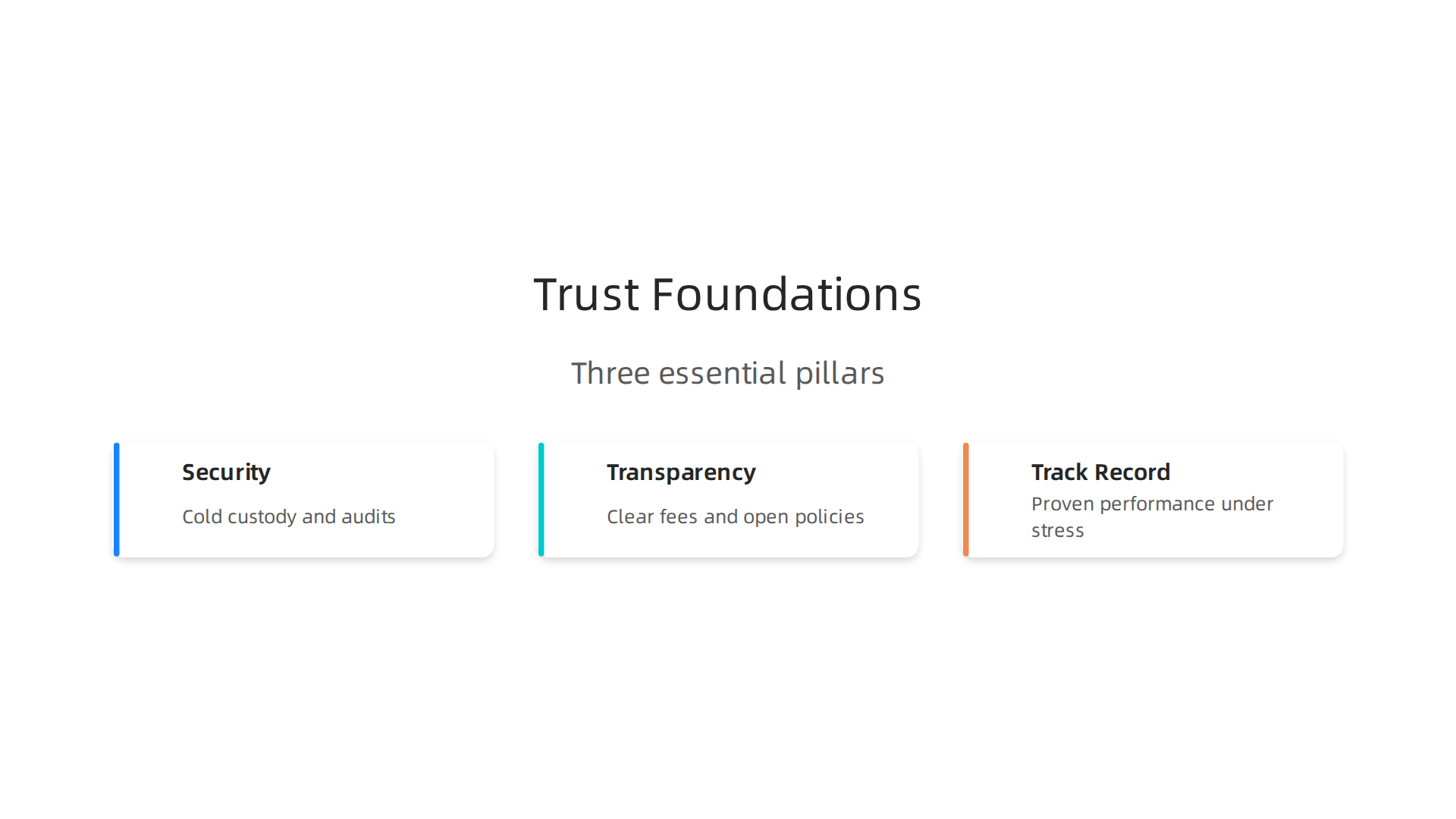
Let’s break down the three non-negotiable pillars of a trustworthy platform.
Pillar 1: Unbreakable Security Fundamentals
This is the bedrock. A secure platform goes beyond a simple password. Look for platforms that use advanced custody solutions. These are the systems that physically protect the digital assets. Top platforms hold certifications like SOC 1 and SOC 2 Type II, which are rigorous, independent audits of their security controls.
You also want user-controlled safety tools. Features like withdrawal allowlisting give you transaction control, allowing you to pre-approve which wallet addresses can receive funds from your account. This is a powerful layer of defense against hackers. Furthermore, check if the platform has insurance for assets held in their custody. This acts as a critical safety net in the unlikely event of a breach. As security guides in 2026 highlight, comparing exchanges on these concrete features is the first step to safety.
Pillar 2: Radical Transparency in Operations
You should never be guessing about fees or wondering if your assets are really there. A trustworthy platform operates in the light. This means a clear, upfront fee structure with no hidden costs for deposits, trades, or withdrawals.
More importantly, look for verifiable proof-of-reserves. This is a public report, often from a third-party auditor, that proves the platform holds all the customer assets it claims to hold. It’s a key check against risky practices. This same principle of verification applies to the assets you trade. Just like you’d inspect a platform, you must inspect the stablecoins you might hold. Our guide on stablecoin due diligence explains exactly how to check for these risks.
Transparency also extends to regulation. A platform should clearly state the licenses it holds and the jurisdictions where it operates legally. In 2026, frameworks like the EU’s MiCA and evolving SEC guidance in the US set the rules of the road. Understanding how your platform navigates this landscape is part of your own risk management.
Pillar 3: A Proven Track Record Under Pressure
Anyone can look good during a bull market. The true test of a platform’s resilience comes during times of extreme stress. Look at its history. How did it perform during a major market crash or a sharp spike in volatility? Did it suffer outages when trading volume exploded?
Pay special attention to how it handled de-pegging events of major stablecoins. A robust platform will have clear processes, open communication, and will not arbitrarily halt trading for all users. Its ability to maintain operations when the market panics speaks volumes about its technical infrastructure and operational integrity. For more on how market stress impacts asset trust, see our analysis on BTC volatility and stablecoin trust.
Whether you’re into day trading crypto or long-term holding, your platform is your partner. Choosing one built on these three pillars is the most important trade you’ll ever make. It’s the foundation that allows your crypto trading strategies to succeed.
Building this knowledge takes time. For clear, step-by-step guidance on crypto safety and strategy delivered to your inbox, subscribe to the free Clicks and Trades newsletter. It’s a simple way to learn with trustworthy advice. Sign Up for free today.
Security Non-Negotiables: From Custody to Insurance
You have your foundational pillars of trust. Now, let’s get specific about the details that separate a good platform from the best crypto trading platform. These are the non-negotiable security checks you must perform before you deposit a single dollar.
Who Holds Your Keys? Custody Models Decoded
This is the most critical question. When you buy crypto, who actually controls it? There are three main models, and each has different risk implications.
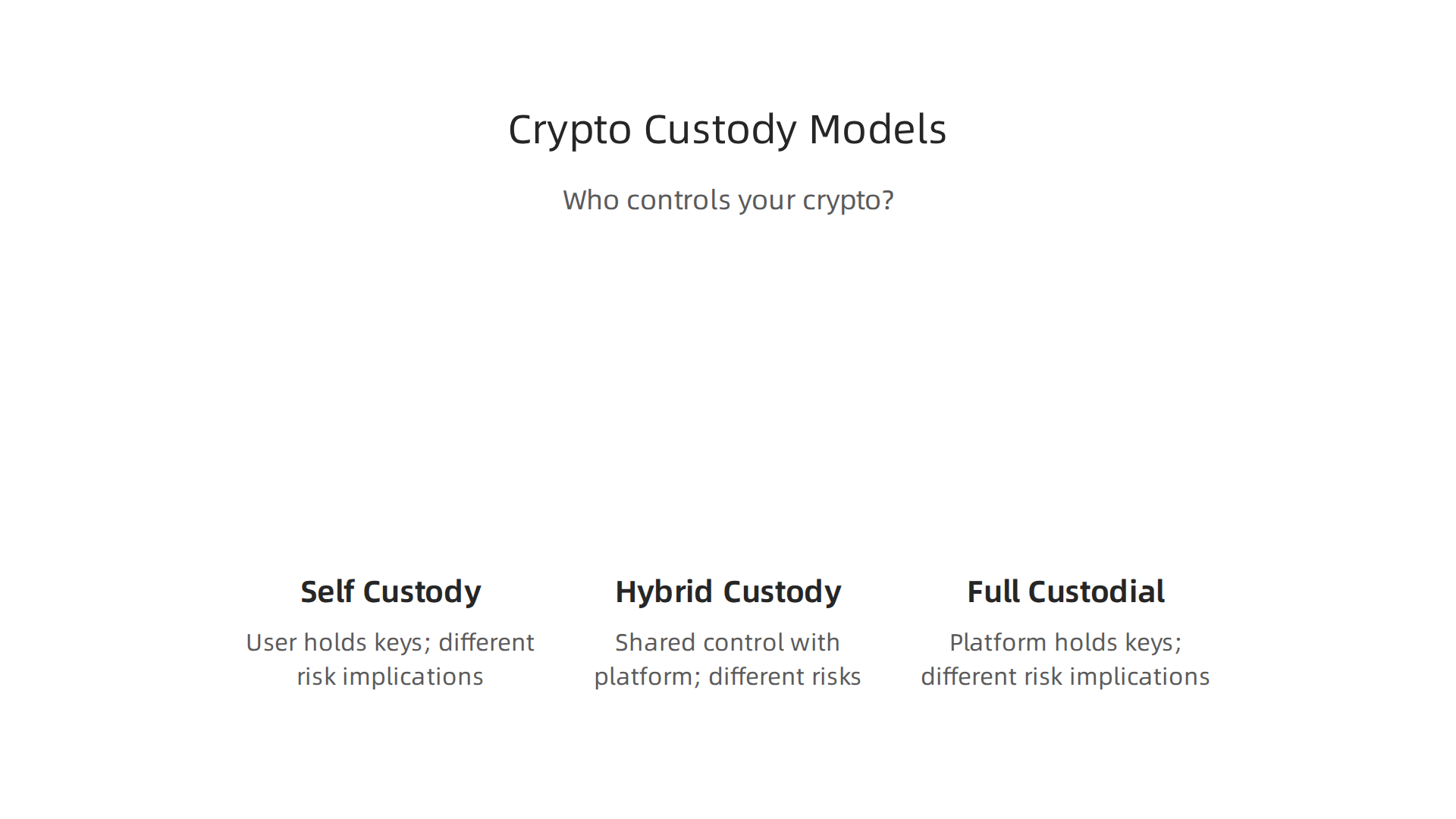
- Self-Custody: You hold your own private keys, often in a hardware wallet. You have total control and responsibility. This is the safest from exchange hacks but riskiest if you lose your keys. It’s not a model offered by trading platforms themselves but is the alternative to using them.
- Hybrid Custody: Some top crypto exchanges in the USA now offer a blend. They might custody most assets in deep cold storage but give you more direct control over withdrawals and transaction approvals. Features like withdrawal allowlisting, which lets you pre-approve wallet addresses, are a hallmark of this approach. Platforms with SOC 1 and SOC 2 Type II certifications have proven their custody security to independent auditors.
- Full Custodial: The exchange holds all customer assets. This is the most common model for beginners. The risk here is platform-specific. If the exchange is hacked or goes bankrupt, your assets could be at risk. This model demands the highest level of trust in the platform’s security and integrity.
The Safety Net: Understanding Platform Insurance
Many platforms advertise "insurance," but what does it actually cover? This is a key area for scrutiny. Most insurance covers assets held in the platform’s custody from theft due to a security breach. However, it almost never covers:
- Losses from you sharing your password (account takeover).
- Losses from market volatility or your own trading decisions.
- Losses if the platform becomes insolvent (goes bankrupt).
Always read the fine print. A platform’s insurance is a critical safety net, but it’s not a blanket guarantee. For a deeper dive into managing asset-specific risks, our guide on stablecoin due diligence is essential reading.
The Rulebook: Licenses and Jurisdiction Matter
In 2026, regulation is not optional. A platform’s licenses are your best indicator of oversight and accountability. A regulated entity must adhere to strict rules about capital reserves, consumer protection, and anti-money laundering practices.
Ask: Is the platform registered as a Money Services Business (MSB) with FinCEN in the US? Does it hold state-level money transmitter licenses? For users in the EU, is the platform compliant with the full MiCA (Markets in Crypto-Assets) framework? These licenses force platforms to operate with transparency and under the watch of government authorities. Understanding these evolving frameworks, from the SEC’s guidance in the US to MiCA in Europe, is a key part of your own security check.
Your security is a shared responsibility. The platform must provide the tools and transparency, and you must know how to use them. For clear, step-by-step guidance on navigating these choices and building safe crypto trading strategies, the free Clicks and Trades newsletter is a fantastic resource. They break down complex topics into simple, actionable advice. Sign Up for free to make your next move with confidence.
Evaluating Platforms for Your Specific Needs
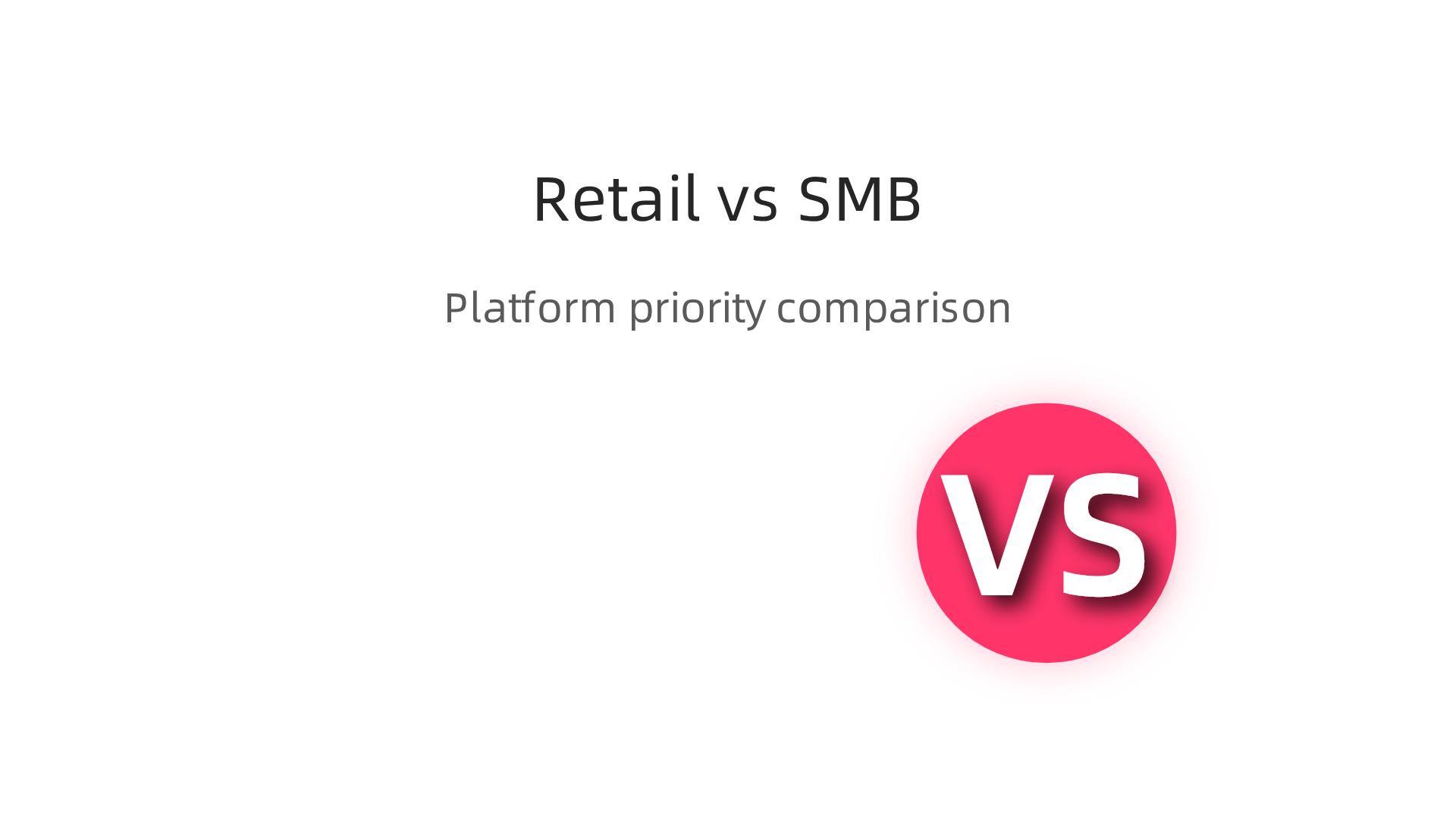
Security is the baseline. But after a platform passes those essential checks, how do you choose the best crypto trading platform for you? The answer depends entirely on your goals. The top crypto exchanges in the USA offer vastly different features. What’s perfect for a casual investor might be a terrible fit for a day trader.
Recent evaluations from trusted sources in 2026, like Money.com’s analysis of 22 companies, stress the importance of matching a platform’s "trading features and user experience" to your personal needs. One size does not fit all.
Here’s how to break it down based on who you are and what you want to do.
For the Individual Retail Trader
If you’re building a portfolio or making occasional trades, your needs are centered on simplicity, education, and cost.
- Ease of Use & Education: You want a clean, intuitive interface. Look for platforms with built-in guides, explainers on how to buy cryptocurrency, and responsive customer support. This is crucial for building confidence.
- Low-Cost Entry: You might not trade huge volumes, so low or zero trading fees on simple buys are key. Also, check deposit and withdrawal fees. Some platforms even let you buy crypto with PayPal or other familiar payment methods for an easy start.
- Core Features: You need reliable spot trading, a decent selection of assets, and easy withdrawal options. You don’t necessarily need complex order types or margin trading.
For this group, the "best" platform is often the one that feels the least intimidating while keeping costs predictable. It’s about making the process smooth so you can focus on your crypto trading strategies.
For Small to Medium-Sized Businesses (SMBs)
Business use is a different game. Your needs are about efficiency, control, and managing risk at scale.
- Advanced Tools & API Access: Automating trades, managing treasury balances, or integrating crypto payments into your business software requires robust Application Programming Interface (API) access. This is non-negotiable.
- Treasury Management: You need features for holding stablecoins as part of your cash management. This makes understanding stablecoin due diligence a critical business skill.
- OTC Desks & Volume Discounts: For larger purchases or sales, using an Over-The-Counter (OTC) desk can provide better pricing and reduce market impact. SMBs should look for platforms that offer this service and competitive fee schedules for higher volumes.
- Compliance & Reporting: Proper tools for generating transaction reports for accounting and tax purposes are essential for any legitimate business.
| Feature | Individual Retail Trader Priority | SMB Priority |
|---|---|---|
| User Interface | Simple, guided, educational | Functional, data-rich, with advanced charting |
| Fees | Low entry costs, transparent pricing | Volume discounts, OTC desk access |
| Key Tools | Easy buy/sell, mobile app | API, treasury dashboard, business reporting |
| Support | General customer help | Dedicated account manager |
The Bottom Line: Align Goals with Features
The search for the best crypto trading platform isn’t about finding a single winner. It’s about honest self-assessment.
- Are you focused on short term crypto trading or day trading crypto? You need advanced charts, fast execution, and possibly leverage (which comes with high risk).
- Are you a long-term investor? Security, low custody fees, and ease of recurring buys are more important than a complex interface.
- Are you a business? API reliability, institutional-grade security, and OTC services top the list.
As noted in broader 2026 market comparisons, the right choice balances "fees, security, supported assets, and withdrawal speed" with your specific technical expertise and goals.
Finding your fit requires clarity on what you want to achieve. For clear, step-by-step guidance that cuts through the noise and helps you build a personalized plan, the free Clicks and Trades newsletter is an excellent resource. Sign Up for free to get practical advice delivered directly to you.
For Retail Investors: Balancing Simplicity and Capability
You want a platform that’s easy to start with but won’t hold you back as you learn. The best crypto trading platform for you finds the sweet spot between being welcoming and powerful. It should feel simple on day one but have the tools you’ll need for your future crypto trading strategies.
Here’s what to look for to get that balance right.
Look for Intuitive Design and Real Education
A clean, uncluttered interface is a must. You should be able to figure out how to buy cryptocurrency without a manual. But a great platform goes further by teaching you. Look for integrated guides, explainer videos, and clear FAQs right where you trade. This built in education is key for building confidence safely. Leading reviews in 2026, like the analysis from Money.com, stress evaluating a platform’s "trading features and user experience" together because they are equally important for newcomers.
Don’t Overlook Automated Tools
As a retail investor, your time is valuable. Features that work for you automatically are a huge advantage. The most useful one is a recurring buy. This lets you automatically invest a set amount weekly or monthly, which is a core strategy for long term growth. Check if these features are available and if there are any extra fees. Comparing platforms on factors like "fees, security, supported assets, and withdrawal speed," as noted in broader 2026 market guides, will help you find a cost effective home for these habits.
Prioritize Responsive Support and Community
When you have a question or an issue, you need help fast. Before you commit to a platform, test their customer service. Are there live chat options? How long does email support take? Also, a strong, positive user community on forums or social media can be an invaluable resource for learning and troubleshooting. Knowing you have backup reduces stress and risk.
A Quick Checklist for Your Shortlist:
- Easy to Use: Is the website or app intuitive from the moment you open it?
- Mobile App: Is the mobile experience robust so you can check things on the go?
- Learning Built In: Does the platform offer articles, tutorials, or glossaries?
- Automation: Does it offer recurring buys or other "set and forget" features?
- Help is Available: What are the support channels and typical response times?
Balancing simplicity with capability means choosing a partner for your journey, not just a tool for a single trade. As you explore the top crypto exchanges in the USA, remember that the right platform should grow with you. For clear, step-by-step guidance that helps you build confidence without the complexity, consider subscribing to the free Clicks and Trades newsletter for practical advice delivered to your inbox. Sign Up today to take the next step in your investing journey.
For SMBs and Serious Traders: Advanced Functionality
For businesses and active traders, a platform needs to be more than just an app. It needs to be a reliable engine for your crypto trading strategies, a secure vault for your treasury, and a precise tool for execution. The best crypto trading platform for you provides professional-grade features that directly impact your bottom line.
Here’s what separates the advanced platforms from the basic ones.
API Reliability is Non-Negotiable
If you’re running algorithmic bots, building business integrations, or engaging in day trading crypto, your tools cannot fail. You need an Application Programming Interface (API) with high uptime, clear documentation, and generous rate limits. An unreliable API can cause missed opportunities and lost profits. When comparing the top 10 crypto exchanges in the USA, scrutinize their developer resources and historical stability reports.
Treasury Management Tools for Business Ops
Managing company crypto assets is different from a personal wallet. Look for features designed for business security and oversight. This includes multi-signature wallets for requiring multiple approvals, detailed reporting for accounting, and permission controls for team members. Proper treasury management protects your assets and streamlines operations, a critical consideration for any SMB. For a deeper dive into securing digital assets, our guide on stablecoin due diligence covers essential risk frameworks.
Access to Liquidity and Advanced Orders
For serious volume, you need access to deep liquidity to avoid slippage on large trades. Leading reviews in 2026 note that the largest exchanges offer the "deep liquidity" necessary for efficient execution. Also, explore whether a platform offers Over-The-Counter (OTC) services for block trades and advanced order types like trailing stops or iceberg orders. These features are vital for sophisticated short term crypto trading and can significantly improve your entry and exit points.
Your Advanced Feature Checklist:
- Robust API: Does it have high reliability, clear docs, and sufficient requests per second?
- Business Security: Are there multi-sig wallets, role-based access, and audit logs?
- Execution Quality: Does it provide advanced order types and access to OTC desks?
- Reporting: Can you easily generate tax and balance reports for your business?
Choosing a platform with these advanced functionalities turns it from a simple portal into a powerful business partner. It empowers you to execute complex strategies and protect your capital with professional tools. For ongoing analysis that breaks down these complex topics into actionable insights, subscribe to the free Clicks and Trades newsletter. Sign Up for clear guidance that helps you trade smarter.
Beyond the Platform: Core Crypto Trading Strategies Explained
Choosing the best crypto trading platform is crucial. But your platform is just the tool. Your crypto trading strategies are the blueprint that tells you how to use it. Your strategy directly dictates what you need from an exchange.
A day trader needs instant execution and advanced charts. A long-term holder needs secure storage and low withdrawal fees.

Let’s break down the core approaches so you can match your strategy to the right features on the top crypto exchanges in the USA.
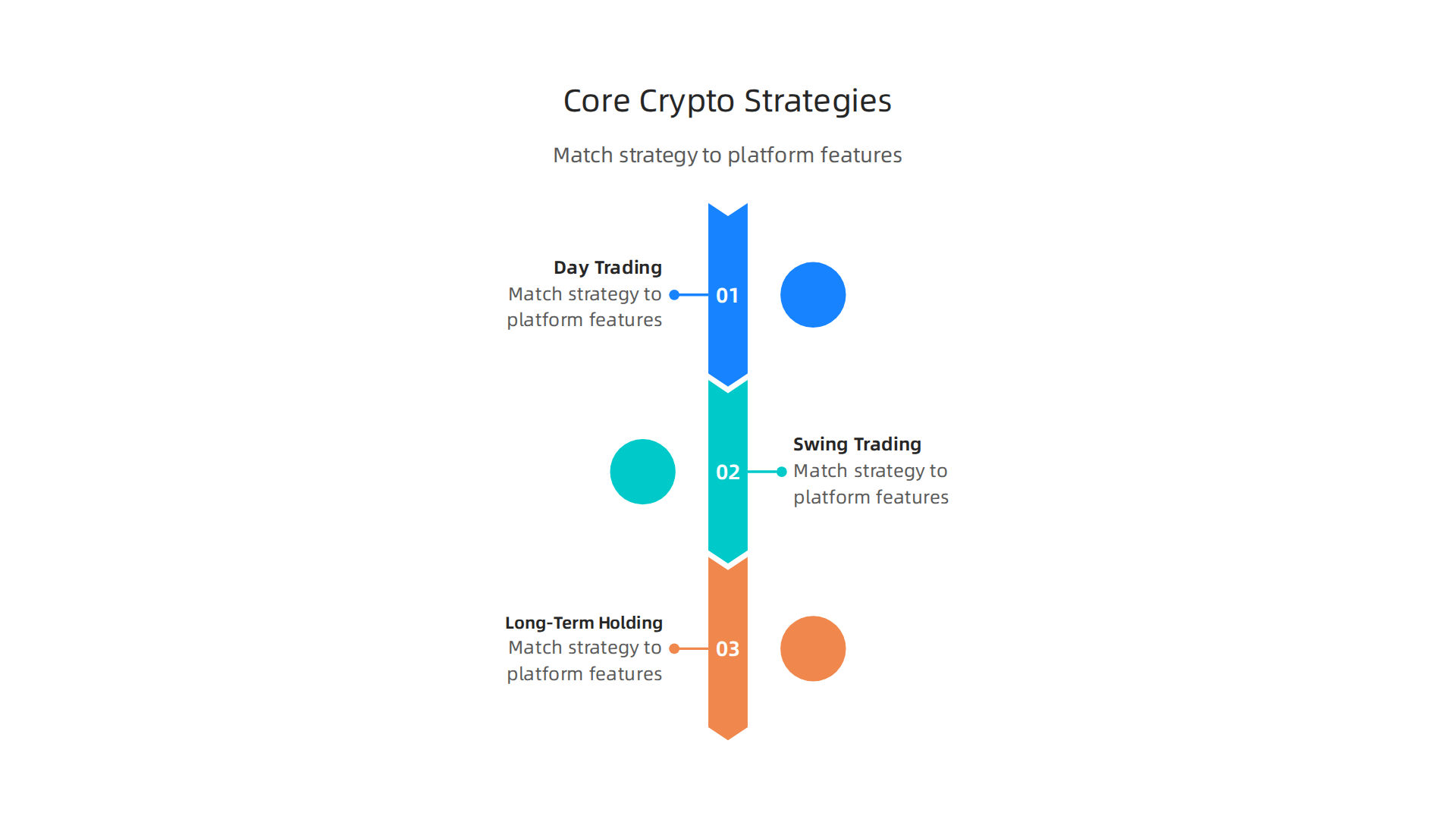
Three Main Paths in the Market
Think of crypto trading like driving. You can take the local roads, the highway, or plan a cross-country trip. Each requires a different plan and a different vehicle.
1. Day Trading Crypto (The Local Roads)
This is short term crypto trading at its most active. You’re in and out of positions within the same day, sometimes within minutes. The goal is to profit from small price movements. This strategy demands intense focus, a platform with ultra-low fees, and real-time data. If you’re engaging in crypto day trading, your chosen exchange must have rock-solid stability during high volatility. A platform that freezes during a spike is a day trader’s nightmare.
2. Swing Trading (The Highway)
Swing traders hold positions for days or weeks, aiming to capture gains from predictable "swings" in the market. This style requires less screen time than day trading but relies heavily on technical analysis to spot trends. You need a platform with great charting tools and reliable order types like stop-losses to automate your exits.
3. Long-Term Holding & Investing (The Cross-Country Trip)
This is the "buy and hold" approach. You believe in the long-term potential of an asset, so you buy it and store it securely, often for years. Here, your priority shifts from trading tools to security and cost. You need a platform or connected wallet with impeccable security practices and low fees for when you buy crypto. For many, simplicity wins, which is why services that let you buy crypto with PayPal or use straightforward apps like Uphold crypto are popular entry points for this strategy.
The Non-Negotiable: Risk Management
No matter your strategy, the number one rule is to protect your capital. This isn’t just a tip. It’s the foundation.
- Position Sizing: Never bet too much on a single trade. A common rule is to risk only 1-2% of your total capital on any given idea.
- Stop-Loss Orders: Always know your exit point before you enter. A stop-loss order automatically sells your asset if the price hits a certain level, capping your loss. This is the most important tool for short term crypto trading and investing alike.
- Emotional Discipline: Have a written plan and stick to it. The market will test your emotions. A plan acts as your anchor.
Understanding risk extends to the assets you hold. For example, many use stablecoins as a safe harbor. But not all stablecoins are equal. Conducting proper stablecoin due diligence is a critical risk management skill for any trader in 2026.
From Guesswork to Confidence: Backtesting Your Strategy
How do you know if your trading idea actually works? You test it against history. This is called backtesting.
Instead of risking real money on a hunch, you use software to simulate how your strategy would have performed in the past. As noted in recent 2026 insights, backtesting helps verify the effectiveness and risk of strategies, avoiding impulsive trading. It shows you your potential profit, your worst losing streak, and your win rate.
You can use platforms like TradingView for manual backtesting or explore more advanced crypto-specific tools. A good starting point is this practical guide on how to backtest trading strategies in crypto. Remember, past performance doesn’t guarantee future results, but trading a backtested strategy is far better than trading a guess.
Reading the Market’s Signals
Smart strategies look beyond the basic price chart. They consider the broader context.
- Market Cycles: Crypto moves in cycles of boom (bull markets) and bust (bear markets). Accumulating during fearful bear markets and taking profits during greedy bull markets is a timeless, strategic approach. Knowing which part of the cycle we’re in can inform whether you should be aggressively trading or patiently accumulating.
- On-Chain Metrics: These are data points pulled directly from the blockchain, like the number of active addresses or the amount of crypto being moved to long-term storage. They can provide a "behind-the-scenes" look at investor behavior that isn’t always visible on the price chart.
Your Strategy Implementation Checklist
Before you execute, run through this list:
- Strategy Defined: Is my entry, exit, and risk management rule written down?
- Platform Fit: Does my chosen exchange support the order types and speed I need?
- Risk Checked: Is my position size safe? Is my stop-loss order set?
- Backtest Reviewed: Have I tested this idea against historical data? (For a comprehensive list of tested approaches, review resources like the 20 best cryptocurrency trading strategies for 2026).
- Market Context: Am I aware of the broader cycle and key support/resistance levels?
Your strategy is your personal roadmap in the crypto markets. It turns the chaotic movement of prices into a structured plan of action. By defining your approach, managing risk ruthlessly, and using data to back your ideas, you move from being a passive participant to an active, informed trader.
Building this skill takes time and consistent learning. For clear, step-by-step guidance that breaks down these concepts week by week, join thousands of others who get smarter with the free Clicks and Trades newsletter. Sign Up for straightforward insights delivered directly to you.
The Critical Role of Stablecoins in Trading and Risk Management
You’ve got your strategy and your platform. Now, where do you park your money when the market gets crazy? For smart traders, the answer is often stablecoins.
Think of a stablecoin as a digital safe harbor. Its value is pegged to something stable, usually the US dollar. When Bitcoin’s price swings wildly, you can quickly swap into a stablecoin. This locks in your dollar value and lets you wait calmly for your next opportunity.
But here’s the catch. Not all stablecoins are created equal. Using the wrong one can be a major risk to your portfolio.
Not All "Stable" Coins Are Equal
Your risk management plan must include picking the right stablecoin. Their safety depends on what’s backing them and how transparent the issuer is.
- Fiat-Collateralized (Like USDC): These are backed by real-world assets like cash and bonds held in banks. They are often viewed as lower risk because of regular, public audits.
- Crypto-Collateralized (Like DAI): These are backed by other cryptocurrencies held in smart contracts. They are innovative but can be more complex and sensitive to crypto market crashes.
- Algorithmic: These use code and financial incentives to maintain their peg. They have historically been the riskiest type and have experienced several major failures.
Choosing blindly is dangerous. Major financial institutions now use formal frameworks to assess this risk. For example, analysts use tools like the Stablecoin Stability Assessment to grade a coin’s ability to hold its peg. As a trader, your own due diligence is just as critical. Before holding any stablecoin, you must understand its backing. A great place to start is with a practical guide on stablecoin due diligence.
From Parking Spot to Profit Center
Savvy traders in 2026 don’t just use stablecoins as a parking spot. They use them actively within their strategy.
Once you’ve moved into a trusted stablecoin, that capital doesn’t have to sit idle. Many platforms and DeFi protocols allow you to earn yield on your stablecoins. This means your safety net can actually generate a small return while you plan your next trade. It turns waiting from a cost into an opportunity.
This whole process relies on using a best crypto trading platform that supports fast, low-cost conversions between crypto and major stablecoins. The ability to move in and out of positions and into a safe asset quickly is a core feature of any top-tier exchange.
Mastering the use of stablecoins transforms you from a passive holder into an active portfolio manager. It’s how you protect your profits and keep your strategy agile.
Understanding these nuances is key to navigating modern crypto markets. For clear, step-by-step breakdowns of concepts like this, join the free Clicks and Trades newsletter. It delivers straightforward insights to help you trade smarter. Sign Up for your next lesson.
Operational Security and Best Practices You Must Follow
You have a great trading plan. You know how to use stablecoins. You’ve chosen one of the best crypto trading platforms.
But what if someone else gets access to it?
Platform security is one thing. Your personal security is the final, most critical defense. It is the lock on your own front door. No matter how strong the bank is, if you leave your key under the mat, you are not safe.
Think about it. Where do you check your portfolio? Probably on your phone or laptop. What happens if that device gets hacked? Or if you click one wrong link? In 2026, the threats are more sophisticated than ever, making your own habits the most important part of your security.
Your Two Non-Negotiable Habits
To protect your assets, you must build two unbreakable habits.
First, use a hardware wallet for cold storage. Do not keep large amounts of crypto on an exchange, even the top crypto exchanges in USA. A hardware wallet, like those discussed in a comprehensive crypto wallet security checklist, keeps your private keys offline. It is a physical device that signs transactions. This makes it nearly impossible for online hackers to steal your funds. It is the single best investment for long term holders.
Second, enforce strict withdrawal whitelists. On your trading platform, find the security setting for "whitelisted addresses." This allows you to pre approve only the crypto addresses you own, like your hardware wallet address.

Once set, funds can only be withdrawn to these addresses. If a hacker gets into your account, they cannot send your crypto to their own wallet. This simple step blocks a huge percentage of account takeover thefts.
The Ever Present Threat of Scams
Your technology can be perfect, but scams target you, the person. Staying safe requires ongoing education. According to security experts, social engineering and phishing remain the top risks in 2026.
Here is what to watch for:
- Fake Support: You get a message from "support" on social media asking for your seed phrase to "verify your wallet." Real support will never ask for this.
- Poisoned Addresses: Scammers send tiny amounts of crypto to your wallet from an address that looks almost identical to one you use. If you copy the wrong address from your history later, you send your funds to them.
- Drainer Links: You click a link for an "exclusive airdrop" or to "revoke a token approval." The site tricks you into signing a transaction that gives a hacker unlimited access to drain your wallet.
The core rule is this: always double check, then check again. Never trust, always verify. For a deeper look at current threats, the guide on how to avoid crypto scams in 2026 provides an excellent checklist.
Your security is a daily practice. It combines the right tools, like a hardware wallet, with smart habits, like using whitelists and questioning everything you see online. This is how you build an unbreakable defense for your crypto trading strategies.
Building this knowledge takes time. For clear, ongoing guidance on security and other essential topics, the free Clicks and Trades newsletter breaks it down into simple steps. Sign Up for your next lesson and trade with more confidence.
The Future-Proof Trader: Adapting to Regulatory and Market Changes
You have built your personal fortress of security. Now, what about the world outside? In 2026, a smart trader knows that rules and markets are always moving. The landscape you started trading in can change overnight with new regulations.
Being ready for this change is what separates a good trader from a future-proof one.
The Shifting Rules of the Game
Regulations for crypto are evolving fast, and they differ greatly depending on where you live. According to analysis of the global crypto regulatory landscape, 2025 saw significant shifts that continue to define 2026. New rules are focusing on stablecoin reserves, consumer protection, and clearer tax guidance.
For you, this means the platform you choose matters more than ever. A best crypto trading platform doesn’t just offer low fees. It proactively works with regulators to ensure its services are stable and legal in your jurisdiction. This long-term stability is a critical feature for any serious trader.
Building a Strategy That Bends, Not Breaks
True sophistication in crypto trading strategies isn’t just about picking winners. It’s about building a plan that can handle surprise rule changes or market shifts.
Here is how to add flexibility:
- Choose adaptable platforms: Support exchanges that are transparent about their licenses and compliance. This is a key trait of the top crypto exchanges in USA and other regulated regions.
- Stay informed on tax implications: Regulatory changes often affect how your trades are taxed. Make it a habit to understand the basics in your area.
- Factor regulation into your analysis: Before making a big move in short term crypto trading, consider if a pending rule could impact that asset. For example, understanding the rules around the stablecoins you use is essential. Our guide on stablecoin due diligence can help you assess this key risk.
Experts point out that 2026 is being shaped by trends like stricter enforcement and institutional adoption, as noted in Elliptic’s 2026 regulatory and policy outlook. Your ability to adapt is your new edge.
Staying ahead doesn’t have to be complex. For clear, ongoing insights that break down these changes, the free Clicks and Trades newsletter delivers helpful updates straight to you. Sign Up to make sure your trading knowledge never goes out of date.
Summary
This article explains how to pick the best crypto trading platform in 2026 by focusing on three core pillars: strong security, radical transparency, and a proven track record under stress. It walks you through concrete checks—custody models, insurance details, withdrawal allowlisting, proof-of-reserves, licensing, and operational history—so you know what to verify before depositing funds. The guide then shows how to match platform features to different users, from retail beginners to SMBs and active day traders, and outlines the tools advanced users need like reliable APIs and OTC access. You’ll also get practical strategy advice (day trading, swing trading, long-term holding), risk-management rules, and how to use stablecoins safely as a liquidity and risk-management tool. The piece finishes with operational security best practices—hardware wallets, whitelists, and scam awareness—and explains why staying adaptive to evolving regulation is essential. After reading, you’ll be able to shortlist platforms that fit your goals, run specific security checks, and implement safer trading habits.